
Best Charleston Neighborhoods for Commuters
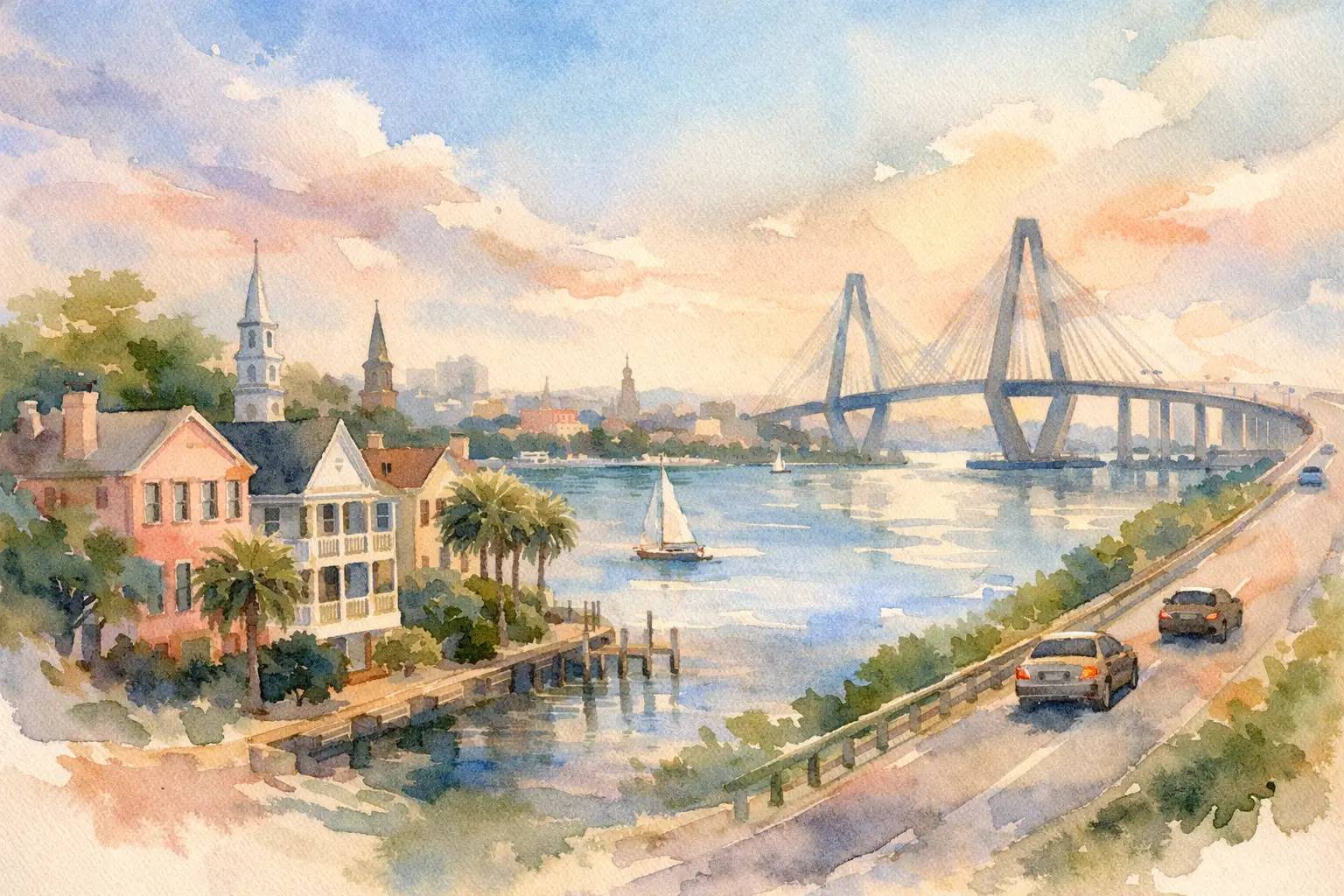
A Charleston commute is rarely defined by mileage alone. A home that looks close on a map can sit on the wrong side of a bridge, an interstate bottleneck, or a school drop-off route. For buyers comparing the best Charleston neighborhoods for commuters, the right choice comes down to where you work, when you travel, and how much daily convenience matters alongside the home itself.
Charleston's geography creates real trade-offs. Peninsula Charleston, Mount Pleasant, Daniel Island, West Ashley, North Charleston, James Island, Johns Island, and Summerville can all make sense for different employers and lifestyles. The strongest decision is not about finding a universally short commute. It is about choosing a location that fits your actual routine and remains a sound long-term real estate decision.
What Makes a Charleston Neighborhood Commute-Friendly?
Before narrowing the search, identify the commute destination. Buyers often say they work in "Charleston" when their office is actually in North Charleston, on Daniel Island, near the airport, at MUSC, or in a downtown Charleston office. Those are very different drives.
Traffic patterns also matter more than a single test drive. Interstate 26, Interstate 526, Highway 17, Savannah Highway, Folly Road, Maybank Highway, and the Ravenel Bridge all carry commuters through areas where congestion can change significantly by time of day. A neighborhood that works well for a hybrid employee may be frustrating for someone making the same trip five days a week at peak hours.
When evaluating a property, consider the complete daily route: school, daycare, grocery shopping, airport access, and return trips after work. For many households, saving 10 minutes each way is valuable, but so is having the space, schools, amenities, or neighborhood character they want at home.
Best Charleston Neighborhoods for Commuters to Downtown
West Ashley
West Ashley remains one of the most practical choices for buyers commuting to the Charleston peninsula. Its location west of the Ashley River offers access to downtown via Highway 17 and the West Ashley bridges, while providing a broader range of home styles and price points than many close-in peninsula neighborhoods.
Buyers can find established neighborhoods, newer construction, townhomes, and properties with more yard space than they might find downtown. Areas closer to the bridges generally offer a more favorable downtown commute, although traffic on Savannah Highway and the bridges should be tested during normal work hours.
West Ashley is especially worth considering for buyers who want proximity to downtown without making peninsula pricing or smaller lot sizes their default compromise.
James Island
James Island is a strong option for commuters who work downtown, at MUSC, or in parts of West Ashley. It offers a residential feel, convenient access to local parks and services, and a location that can work well for households who also spend time at Folly Beach.
The trade-off is route dependency. Folly Road and the James Island Connector can be busy, particularly during peak periods and beach-season weekends. Buyers should pay close attention to which side of the island a property is located on and how that location affects the most frequent drive.
For the right buyer, James Island provides a desirable balance between a close-in commute and a relaxed Lowcountry setting.
Downtown Charleston
Living on the peninsula can reduce or eliminate a traditional commute for professionals working downtown, at the Medical University of South Carolina, College of Charleston, local law firms, hospitality businesses, and government offices. Walkability, dining, historic character, and access to employment centers are major advantages.
The trade-offs are equally clear: higher purchase prices, limited parking, older housing stock, potential flood considerations, and smaller outdoor spaces. Downtown is often the right answer for buyers who place a premium on time and walkability, but it is not automatically the best fit for every household.
Best Charleston Neighborhoods for Commuters to Mount Pleasant and Daniel Island
Mount Pleasant
Mount Pleasant is the natural first stop for buyers working in Mount Pleasant, on Daniel Island, or at employers along Highway 17. It offers a deep selection of communities, from established neighborhoods and townhome communities to newer developments with amenities.
For commuters headed to downtown Charleston, proximity to the Ravenel Bridge deserves careful attention. A home near the bridge approach may provide a very different weekday experience than one farther north near the Isle of Palms Connector or in the Highway 41 corridor.
Mount Pleasant's appeal is broader than the commute. Strong neighborhood amenities, retail access, recreation, and a range of housing options make it a consistent choice for move-up buyers and relocating households. The main consideration is value: buyers should compare purchase price, property taxes, insurance, HOA fees, and commute time together rather than focusing on any one factor.
Daniel Island
Daniel Island works particularly well for professionals based on the island, in Mount Pleasant, or near North Charleston and the airport. Access to Interstate 526 can make cross-market travel more manageable than it is from some coastal communities.
The community offers a planned environment with trails, shops, parks, and a distinct neighborhood identity. Homes can command a premium, and buyers should evaluate whether the lifestyle, amenities, and location justify that investment for their plans. For someone commuting downtown every day, it is important to drive the route during peak traffic rather than relying on an off-hour estimate.
Best Charleston Neighborhoods for North Charleston, Airport, and I-26 Commuters
North Charleston
North Charleston is often underestimated by buyers focused only on historic Charleston or coastal communities. For commuters working near Charleston International Airport, Boeing, the Port of Charleston, Joint Base Charleston, medical facilities, or business corridors along I-26, it can be one of the most efficient locations in the region.
Housing options vary widely by neighborhood, which creates opportunity for buyers who are clear about condition, schools, resale considerations, and their preferred level of neighborhood amenities. A locally informed property search matters here because two areas with similar drive times can offer very different housing inventory and long-term appeal.
North Charleston can also suit buyers who need frequent airport access or want to avoid crossing a bridge as part of their daily work commute.
Summerville
Summerville is a compelling choice for buyers who work in North Charleston, Ladson, Goose Creek, or along the I-26 corridor and want more home for their budget. It is well known for established neighborhoods, newer communities, larger homes, and a strong suburban lifestyle.
The trade-off is straightforward: a daily downtown Charleston commute can be demanding, particularly at peak travel times. Summerville is generally a better fit for hybrid workers, remote workers, and professionals whose jobs are north or northwest of the peninsula.
For families prioritizing square footage, neighborhood amenities, and a suburban setting, Summerville may offer strong value. The key is being realistic about how often the household needs to travel to downtown, Mount Pleasant, or the beaches.
The Best Charleston Neighborhoods for Commuters Are Not Always the Closest
Johns Island is a good example. It can be an excellent fit for buyers who value land, newer homes, and a quieter setting, especially if they work remotely or have flexible schedules. But routes through Maybank Highway and toward downtown can become congested, making it less appealing for a rigid daily commute.
Likewise, a Mount Pleasant address may look ideal for downtown access but become less convenient if a household regularly travels to North Charleston or Summerville. The best neighborhood is often the one that reduces the friction of your most frequent trips, not the one with the shortest drive to a single destination.
A smart home search should include weekday route testing, ideally at the time you would actually leave for work and return home. Test the school run if that is part of your routine. Check nearby grocery stores, medical care, and the routes you will use when traffic, weather, or a bridge incident changes the normal plan.
How to Choose With Confidence
Start with a clear ranking of priorities: commute, budget, home size, schools, walkability, flood exposure, outdoor space, and neighborhood amenities. Few Charleston neighborhoods deliver the maximum of every category, so the goal is to identify the trade-offs you are genuinely comfortable making.
For relocating buyers, it is especially helpful to compare several areas in person before committing to one. Matt Miller Sells Charleston LLC helps buyers evaluate not just a home's features, but how its location supports their work, lifestyle, and long-term goals in the Charleston market.
The right commute decision gives you more than saved time in the car. It gives you a home location that still works when your schedule changes, your family grows, or your priorities shift.
Categories
Recent Posts











Matt Miller Sells Charleston LLC
Phone